Dental implant success doesn’t happen in isolation. It’s built on strong collaboration between the clinician and the laboratory. While complications are often associated with surgical placement or restorative technique, many issues can be avoided entirely with the right lab partnership and proactive communication.
"Implant dentistry can be challenging, but it’s also incredibly rewarding once properly understood. When clinicians and labs work together early in the process, outcomes become far more predictable. Focusing on the best possible outcome for the patient and working closely as a team consistently leads to success.”
— Cynthia Chambers, Director of Clinical Education
Abutment Selection: Building the Case on the Right Foundation
Choosing the wrong abutment can lead to compromised esthetics, poor retention, and long-term mechanical issues. Factors like angulation, tissue height, and restorative space all play a role.
A strong lab partner evaluates:
- Implant system and platform size
- Tissue depth and biotype
- Interocclusal space and material selection
“The most critical information a doctor can provide is the implant system and platform size. From there, detailed instructions like emergence profile preferences and future treatment plans allow us to design with intention.”
— Wadih Dagher, Implant Specialist
Custom abutments, when indicated, allow for precise margin placement and better tissue support, reducing complications down the line.
Soft Tissue Management: Supporting Long Term Health
Soft tissue plays a major role in both esthetic outcomes and long term implant success. Poor contouring or lack of tissue support can lead to inflammation, recession, or patient dissatisfaction.
Labs help prevent this by:
- Designing restorations that respect biological boundaries
- Supporting papilla through proper interproximal contours
- Guiding provisional restorations to shape tissue early
Even in complex or esthetically demanding cases, a collaborative approach leads to better results.
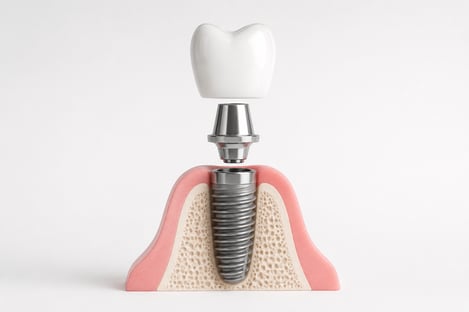
Emergence Profiles: Creating Natural, Cleansable Results
An improper emergence profile can result in hygiene challenges, food impaction, and unnatural looking restorations.
Labs play a key role in:
- Designing smooth, cleansable transitions
- Mimicking natural tooth anatomy
- Ensuring proper tissue support
With digital workflows, labs can visualize and refine these contours with precision, ensuring consistency from provisional to final restoration.
Scan Body and Digital Capture Errors: Preventing Misfits Early
One of the most common causes of implant complications is inaccurate digital impressions. Improper scan body seating, missing data, or distortion can lead to costly remakes.
“To avoid scanning errors, always confirm the scan body is fully seated. Taking a radiograph is highly recommended. From there, following proper scanning protocols and reviewing the scan before submission makes a huge difference.”
— Wadih Dagher, Implant Specialist
Labs support by:
- Reviewing scans for accuracy and completeness
- Identifying issues early and requesting corrections
- Ensuring digital prescriptions are entered correctly with all necessary details
These small steps can prevent major issues later in the process.
Torque Guidance: Protecting the Final Restoration
Improper torque can result in screw loosening, fractures, or even implant failure. While torque is applied chairside, labs ensure clinicians have the correct specifications and components.
Support includes:
- Providing manufacturer-based based torque recommendations
- Verifying compatibility of implant components
- Designing restorations for proper screw access and angulation
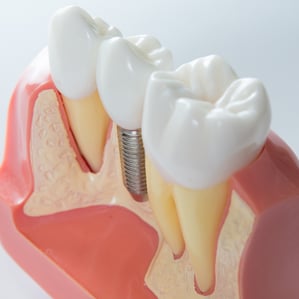
A True Partnership in Prevention
Preventing implant complications isn’t about reacting. It’s about anticipating. Labs that act as an extension of the clinical team can help guide decisions, validate workflows, and catch potential issues early.
“Implant cases become much more approachable once you understand the fundamentals. Even though no two cases are the same, that’s what makes them so engaging and why collaboration is so important.”
— Cynthia Chambers, Director of Clinical Education
At DDS Lab, that partnership extends beyond case design. In office scanner training, ongoing support, and access to a dedicated team help practices build confidence as they incorporate digital workflows into their implant processes.
The lab is supported by technicians with experience across fixed, removable, and implant restorations, which allows for collaboration on a wide range of case types. This technical perspective can be useful when reviewing scans, confirming component selection, or navigating more complex restorative considerations.
Having that level of input available adds an extra layer of consistency and review, helping support more predictable outcomes and a more efficient overall workflow.
