While the direct cost of remakes is easy to identify, the indirect operational impact is often far greater. Understanding where remakes originate and how to systematically reduce them is essential to building a scalable, efficient restorative workflow.
As a national laboratory supporting thousands of clinicians, DDS Lab sees a clear pattern. Most remakes are not material failures. They are preventable workflow failures.
The True Cost of Remakes
The financial impact of remakes extends well beyond materials and lab fees. Each remake introduces downstream consequences that affect the entire organization.
Hidden costs include:
- Additional chairtime and reduced production capacity
- Increased labor costs across clinical, administrative, and lab teams
- Delayed case completion and extended treatment timelines
- Decreased patient confidence and satisfaction
- Reduced provider and team efficiency
Industry estimates often place fully burdened chairtime costs at $500 to $600 per hour. When remakes require additional appointments, those costs escalate quickly, particularly in high production environments.
For DSOs, these costs multiply across locations, turning isolated issues into system wide performance gaps.
Common Drivers of Remakes
Most remakes are not clinical failures. They are workflow failures. Inconsistent processes and incomplete data are the most common contributors.
Frequent causes include:
- Inaccurate or incomplete digital scans
- Poor margin capture or unclear margin definition
- Inadequate preparation design for selected materials
- Missing or inconsistent shade and photography data
- Incomplete lab prescriptions or unclear clinical intent
- Late stage case changes after fabrication has begun
Without standardized workflows, these issues become repeatable and costly.
In removable workflows, traditional analog processes that require multiple try ins and manual adjustments can further increase remake exposure and variability.
New Digital Expectations in Modern Practices
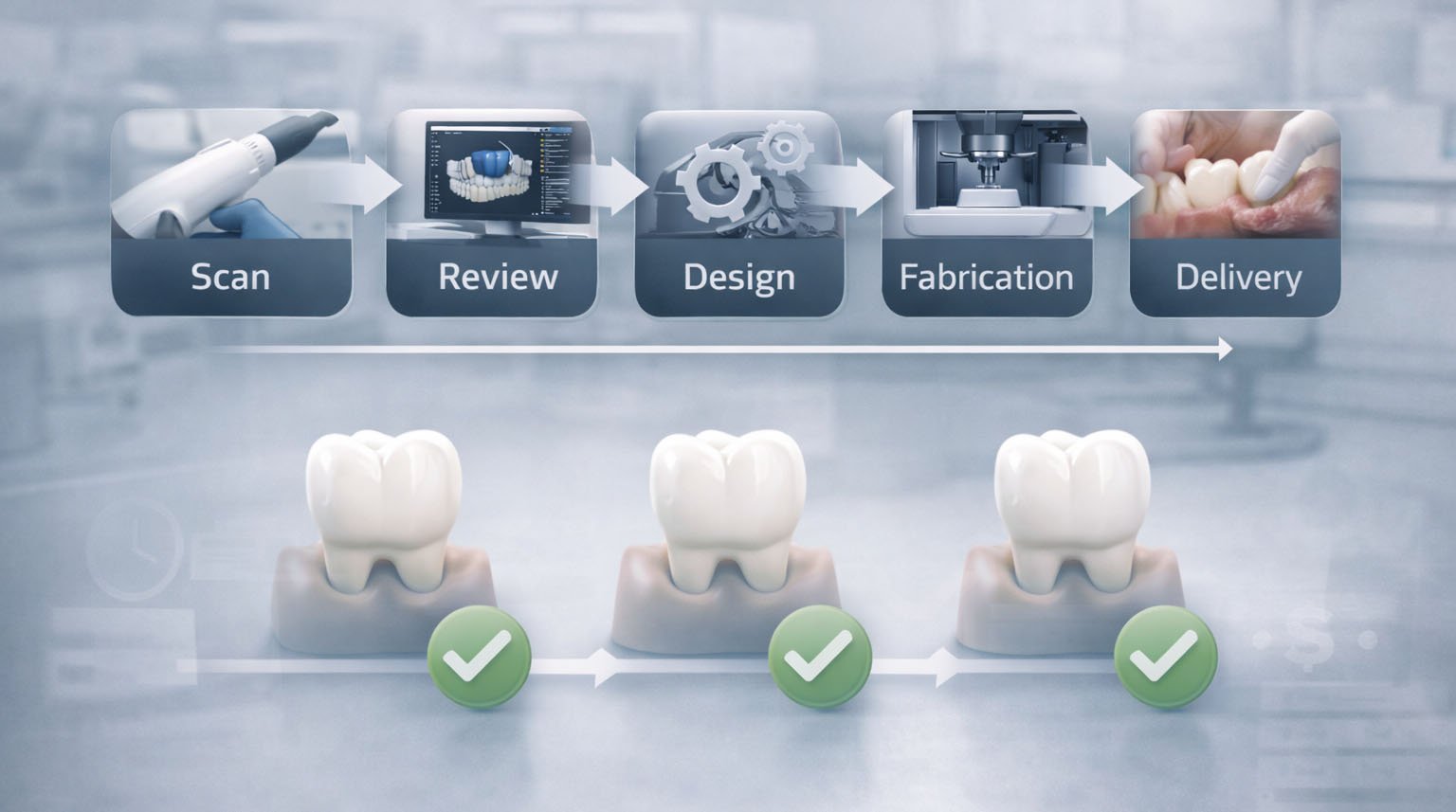
As digital dentistry continues to scale, data quality has become the new standard of care. Laboratories depend on accurate, complete digital inputs to deliver predictable outcomes.
Best practices for digital success include:
- Reviewing scans for margin clarity, data density, and stitching accuracy prior to submission
- Verifying occlusal clearance digitally before sending cases
- Standardizing scanning protocols across providers and locations
- Using consistent naming conventions and submission requirements
For DSOs, digital consistency is critical to reducing variability and maintaining quality at scale.
When digital workflows are standardized and executed consistently, remake rates decline and first pass success improves measurably.
Strengthening Prep Design to Reduce Remakes
Preparation design remains one of the most controllable variables in remake prevention.
Key considerations:
- Material specific reduction guidelines must be followed consistently
- Smooth, rounded internal line angles support better fit and strength
- Clear, continuous margins reduce interpretation errors
- Preparation designs should account for CAD and CAM manufacturability
Standardizing preparation criteria across providers significantly improves first pass success.
DDS Lab’s technical teams routinely support practices in restoration driven prep alignment to reduce preventable redesigns and remakes.
Communication Gaps That Lead to Rework
Many remakes are caused not by execution, but by misalignment between the practice and the lab.
Opportunities to improve include:
- Providing complete, detailed lab prescriptions
- Aligning on esthetic expectations before fabrication
- Responding promptly to lab questions to avoid case holds
- Establishing escalation pathways for complex cases
Clear communication reduces rework and accelerates turnaround times.
Digital collaboration tools, including DDS Lab’s Design Vault™, further reduce interpretation errors by enabling real time case review and structured feedback prior to fabrication.
DSO Specific Strategies for Reducing Remakes
For DSOs and multi site organizations, remake reduction requires system level solutions rather than individual fixes.
Effective strategies include:
- Implementing standardized clinical and digital workflows across all locations
- Tracking remake rates and root causes at the provider and site level
- Partnering with laboratories capable of supporting scale and consistency
- Leveraging data analytics to identify trends and training opportunities
When remakes are measured and managed, they become preventable rather than accepted.
Laboratory selection plays a critical role. Consistent manufacturing processes, digital integration, and quality controls directly influence remake performance across an organization.

The Takeaway: Remakes Are a Systems Problem
Remakes are not an inevitable cost. They are a signal. Practices that address workflow gaps, standardize digital inputs, and strengthen lab collaboration consistently reduce remakes while improving efficiency and patient outcomes.
Digitally manufactured removable workflows provide a clear example. DDS Lab’s 3D Printed Denture process has yielded a 1.3 percent lab fault remake rate, demonstrating how controlled digital production and standardized workflows materially reduce variability.
For DSOs in particular, the opportunity is significant. Fewer remakes mean more available chairtime, improved margins, and a better experience for patients and providers alike.
The path forward is clear. Invest in systems, not rework.
Learn how DDS Lab’s digital removable workflow reduces remakes and operational friction →
